13 November 2026
Key Air Quality Checks After Carpet Mold Remediation
Presented by @thedryhome
Why Indoor Air Quality Matters After Mold Removal
Mold remediation is not complete when the contaminated carpet is gone. The spores, mycotoxins, and microbial particles that triggered the problem may still linger in the air, on surfaces, and inside the building’s HVAC system. Testing the air quality after remediation gives you a clear picture of whether the space is truly safe to reoccupy. Without these checks, you risk breathing in irritants that can cause respiratory issues, allergic reactions, and long-term health problems. The following checklist helps you confirm that the air in your home or office is clean, dry, and free of mold-related contaminants after carpet mold remediation.
1. Visual Inspection for Residual Mold
Before you reach for an air quality monitor, look around. Visible mold on walls, baseboards, or subflooring indicates that the source has not been fully removed. Even a small patch of remaining growth can release spores into the air over time. Check corners, behind furniture, and along the edges of the room where the carpet was removed. If you see any discoloration, musty odors, or damp spots, the remediation process was incomplete. Addressing these visible signs first prevents the need for repeated air testing later.
2. Moisture and Humidity Levels
Mold requires moisture to thrive. After remediation, the underlying cause, whether a leak, high humidity, or poor ventilation, must be resolved. Use a hygrometer to measure indoor humidity. The ideal range is between 30% and 50%. Readings above 60% create conditions where mold can return within days. Check the relative humidity in several spots, especially near the area where the carpet was removed. If the subfloor or drywall still feels damp, drying equipment may be needed. Dehumidifiers and increased airflow can bring moisture levels down, but persistent dampness suggests a hidden leak that requires professional attention.
3. Airborne Particle Sampling
Portable air quality monitors that measure particulate matter (PM2.5 and PM10) can detect mold spores and other microscopic debris. While these devices cannot identify the species of mold, a spike in particle counts after remediation indicates that contaminants are still circulating. Take baseline readings with the HVAC system running and again with windows closed. Compare the numbers to outdoor air quality. If indoor levels are significantly higher, additional cleaning or HEPA air filtration is warranted. For a more precise assessment, you can hire a company that performs spore trap analysis. This method collects samples on a sticky surface and sends them to a lab for identification. It is especially useful if anyone in the building has mold allergies or asthma.
4. HVAC System Inspection and Cleaning
The heating, ventilation, and air conditioning system is a common reservoir for mold spores. When the carpet was contaminated, the HVAC may have circulated those spores throughout the ductwork. After remediation, have the ducts inspected. Look for dust buildup, condensation, or visible mold on vents and coils. Change all filters and consider upgrading to HEPA or MERV-13 filters that capture smaller particles. If the system has a built-in humidifier, ensure it is not adding excess moisture to the air. A clean HVAC system supports the work done during Carpet Mold Removal Services Pros carpet mold remediation by preventing recontamination from hidden sources.
5. Odor Persistence
Musty smells are a reliable indicator that mold or its metabolic byproducts remain in the environment. Even if the carpet is gone, the odor can be absorbed by porous materials like drywall, wood framing, and insulation. After remediation, air out the room for 24 to 48 hours. Then close it up and perform a “smell check” after a few hours. If the musty odor returns, there is likely a hidden source of moisture or residual mold. A professional mold inspector can use a moisture meter and thermal imaging to locate the problem. Do not rely solely on air fresheners or odor neutralizers, they mask the issue without solving it.
6. Surface Dust Sampling
Spores settle on horizontal surfaces like shelves, countertops, and floors. After remediation, wipe a clean, damp cloth across a representative area and check for any discoloration or fine residue. For a more rigorous test, use adhesive tape to lift a sample of dust from a surface, then examine it under a microscope or send it to a lab. Surface sampling helps confirm that the cleaning process removed spores from the environment. It is especially important if the remediation was limited to carpet removal and did not include thorough cleaning of surrounding walls and furniture.
7. Re-testing After a Few Weeks
One air quality test is not enough. Mold can grow back if moisture conditions return or if hidden colonies were missed. Schedule a follow-up test two to four weeks after the initial remediation. This allows enough time for any remaining spores to become airborne or for new growth to appear. Compare the results to the first test. If particle counts or humidity levels have risen, investigate the cause promptly. The goal is a stable, low-moisture environment where mold cannot take hold. Professional services like Carpet Mold Removal Services Pros carpet mold remediation can provide guidance on maintaining those conditions, but the responsibility for ongoing monitoring rests with the building owner or occupant.
8. Verify That Drying Is Complete
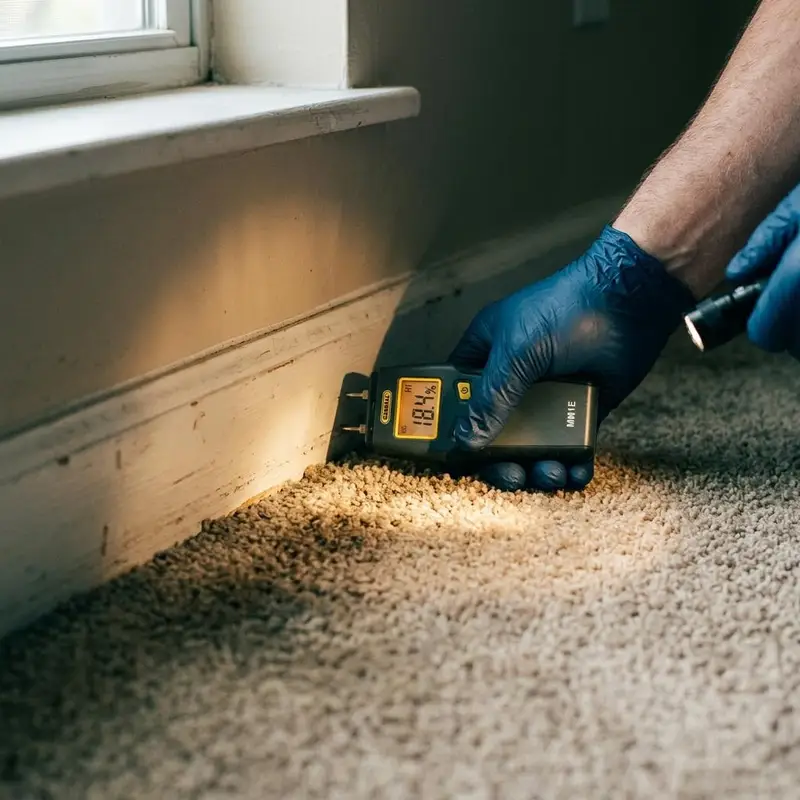
Moisture trapped beneath subflooring or inside wall cavities can sustain mold growth even after the carpet is gone. Use a moisture meter to check the moisture content of wood, concrete, or other structural materials. Readings should be consistent with dry building materials, typically below 16% for wood and below 5% for concrete. If any area still shows elevated moisture, run fans and dehumidifiers until the readings stabilize. Do not seal the floor or install new carpet until the substrate is completely dry. Otherwise, you are simply laying the foundation for a future mold problem.
9. Document and Trend the Results
Keep a log of your air quality measurements, humidity readings, and any professional inspection reports. This documentation is valuable for insurance claims, property transactions, or future reference. It also helps you spot patterns. For example, if humidity spikes every summer, you can take preventive measures before mold returns. Consider using a data-logging hygrometer that records levels over time. Some smart home systems can alert you when humidity crosses a threshold. By tracking these metrics, you can catch small issues before they become major remediation projects.
10. When to Call a Professional
If you complete these checks and still have concerns about air quality, it is time to bring in a specialist. An independent indoor air quality consultant can perform comprehensive testing that goes beyond consumer-grade monitors. They can measure volatile organic compounds (VOCs), carbon dioxide levels, and specific mold species. They can also test for mycotoxins, toxic compounds produced by some molds, which require specialized equipment. While professional testing adds cost, it provides definitive answers and peace of mind. For commercial properties or homes with immunocompromised residents, professional verification is strongly recommended.
Reclaiming healthy indoor air after carpet mold remediation requires more than removing the visible problem. It demands a systematic approach to moisture control, particle removal, and ongoing vigilance. By following this checklist, you can ensure that the air you breathe is clean, dry, and free of mold-related hazards. The investment in testing and monitoring pays off in better health, fewer respiratory complaints, and a space that feels fresh rather than musty. With the right tools and a methodical mindset, you can maintain the results of remediation long after the work is done.